In schools
Student-run produce stands and snack ventures in schools
At a glance
- Social purpose and business activity
- School day sales follow standards
- Free snacks are a separate model
- Produce handling has safety steps
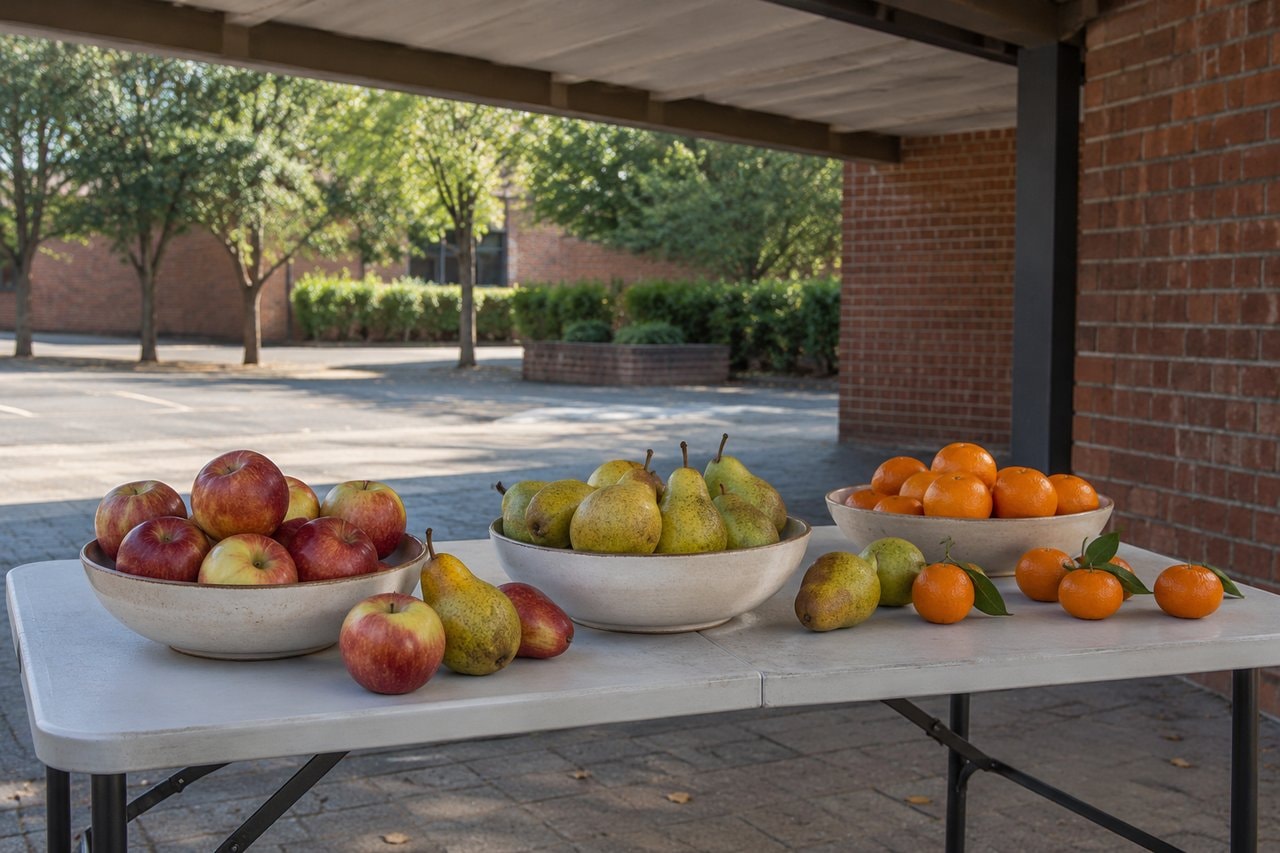
A student-run produce stand brings a food-distribution task into a school setting. The phrase describes who takes part and what is handled; it does not identify a federal program, establish a school's authorization to sell food or show that a stand achieves a particular result. For adults reading about this model, its business purpose, the conditions of sale and the handling of produce are separate subjects. A snack venture adds the same need to distinguish learning activities from the rules that govern the food offered.
A venture with a social purpose
Wikipedia's social entrepreneurship article describes organizing and financing responses to social, cultural or environmental issues. It distinguishes financial measures of business performance from social goals, while noting that enterprises can combine them. This provides a conceptual frame for understanding a school stand intended to make produce available while involving students in a business activity. The concept explains an aim; it supplies neither a claim about an individual school nor evidence that participating students develop a particular skill.
Reading a stand as a social enterprise therefore involves different questions from reading it solely as a point of sale. The food-access purpose concerns distribution. The enterprise purpose concerns the arrangement of buying, handling and selling. The educational purpose concerns what participants are intended to learn from that arrangement. Those purposes may sit together in a description, but they remain separate from measured outcomes. The youth jobs and leadership page considers how adults describe learning and participation alongside employment responsibilities.
Foods sold during the school day
USDA's Food and Nutrition Administration states on its Smart Snacks in Schools page that foods sold at school during the school day must meet nutrition standards. The agency describes a rule covering à la carte sales, school stores, vending machines and other venues selling food to students. A stand's educational purpose does not, in that description, create a separate category beyond the selling venues the agency lists. The relevant distinction is that food is being sold in the setting and period covered by the rule.
The agency's page also identifies guidance and tools for schools to assess foods against the criteria. That is a description of the rule's supporting resources, rather than a determination about a proposed snack or a particular school's arrangements. It does not supply a complete local policy, a permission to begin sales or an assessment of an individual item. School meals and the school day explains how food sales fit beside meals, snacks and wellness policies. Reading those categories separately avoids treating every food activity in a school as the same program.
A free-snack model is different
On its Fresh Fruit and Vegetable Program page, USDA describes free fresh fruit and vegetable snacks for children in eligible elementary schools. The agency says schools deliver those snacks with short nutrition lessons and describes learning about seasonal produce among the program's aims. The absence of a sale distinguishes this model from a stand. Its eligibility language also matters: the federal description refers to eligible schools, rather than declaring that every elementary school participates.
A food lesson and a food transaction are therefore different features, even when both involve produce. The free-snack description concerns a federal program with a stated audience and delivery model. A student-run stand is a broader description of an activity. Neither label alone establishes the source of the produce, a relationship with a farm or the existence of a garden. The school gardens page considers growing and teaching as related subjects without assuming that a garden supplies a particular stand.
Produce handling before service
The Food and Drug Administration's produce-safety guidance explains that contamination can occur during growing, storage or preparation. Its practical guidance calls for clean hands before preparation, washing produce under running water and cleaning surfaces and utensils between handling raw animal foods and produce that will be eaten uncooked. The FDA does not recommend soap, detergent or commercial produce wash for washing produce. These are attributed safety measures for adults responsible for handling food.
The FDA also describes removing damaged areas, discarding rotten produce and drying washed items with a clean towel. It distinguishes whole produce from produce that has already been cut: its guidance calls for refrigerating produce purchased pre-cut or packaged. The agency notes that washing can reduce bacteria without eliminating all of them. That qualification is essential when a food activity is described as safe. A washing step is part of handling guidance, rather than proof that an item has no contamination. The cooking classes and kitchen safety page discusses related preparation tasks.
Young workers remain workers
The Occupational Safety and Health Administration's young-workers page states that young people have rights at work and that an employer is responsible for providing a safe workplace. This responsibility belongs alongside any educational or social-enterprise description. Calling an activity a learning opportunity does not itself describe its employment status or resolve the safety questions associated with the work. OSHA's brief overview supports the distinction between the worker's rights and the employer's duty; it does not establish staffing, age rules or permissions for a particular stand.
For an adult organizer, a useful description of a school food venture keeps these strands visible: its stated social purpose, its educational activity, the conditions under which food is sold and the agency guidance relevant to handling. A description that addresses only the display of fruit leaves the governing food-sale category and workplace responsibility unexplained. The cited agency pages offer the federal descriptions of those subjects, while the social entrepreneurship reference supplies the conceptual language for reading the venture's goals.