Programs & people
What school and community food programs set out to do
At a glance
- Education and practical food knowledge
- Food access and local connections
- Physical activity within program aims
- Aims differ from measured results
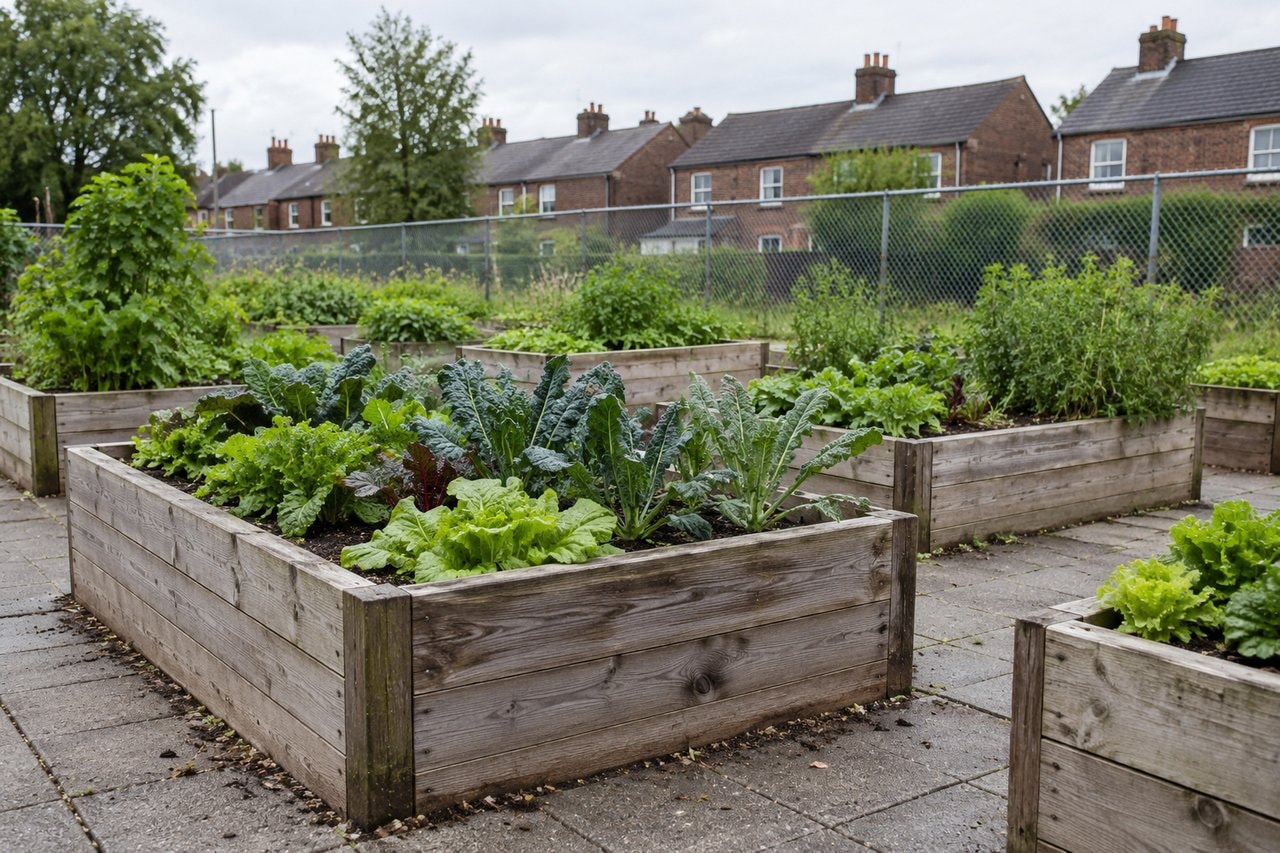
School and community food programs may share a setting without sharing a purpose. A lesson concerns learning; a meal program concerns food service; a garden can be a teaching setting as well as a place where food grows. Agency descriptions often connect these purposes, but an aim remains different from a measured result. Reading the stated purpose helps make sense of the activity without making a promise about its effects. The field guide to program models shows how the aims below relate to different arrangements.
Teaching knowledge and skills
USDA's Food and Nutrition Administration describes Team Nutrition as supporting child nutrition programs through foodservice training and technical assistance, nutrition education for children and caregivers, and school and community support for eating and physical activity. Education is therefore part of the program's purpose alongside support for the people operating food services. A teaching resource and an operational resource can concern the same food setting while addressing different readers and tasks.
Wikipedia's account of nutrition education describes learning experiences that involve individuals, communities and policy settings, and includes food security, food literacy and sustainability within the subject. This gives nutrition education a broader scope than recalling the names of nutrients. The concept includes the setting in which food-related knowledge is used. Its educational aim can be discussed without prescribing a reader's food intake or judging a household's choices.
The learning pages follow that distinction. They explain what a framework is, which agency describes it and how a teaching approach is defined. The school-education page connects the classroom discussion to federal education initiatives and local school policies. It also separates learning activities from research about those activities. The stated educational aim provides the starting question; a study supplies a different kind of information about what happened in the settings it examined.
Making connections to food and farms
USDA's Patrick Leahy Farm to School Program helps child nutrition operators incorporate local food into meal programs, and makes local food and agricultural education available through grants, research, technical assistance and training. Its description puts food supply and education together. The connection involves the school meal system as well as the classroom; it is broader than a garden lesson alone. Local food is a subject of procurement and agricultural learning within this federal program.
That purpose differs from a general claim that every garden or market can meet all food needs. A description of access identifies how a program is intended to connect people with food. It does not establish the scale of the supply, its availability in a particular neighborhood or a measured result for a household. The food-access page explains the terms used for those wider questions.
Food literacy and the local food system
Wikipedia describes food literacy as a collection of food-related knowledge, skills and behaviors whose definitions vary with the setting, and notes that social, economic, political, cultural and environmental factors influence it. The concept concerns a relationship with food rather than a single classroom topic. Planning, preparation and understanding context belong to that discussion. Naming these dimensions explains the term without supplying instructions about what anyone should eat.
Wikipedia's account of community food security considers food access and availability at community level and describes local food systems in relation to social, economic and institutional factors. This changes the scale of the question. It asks about the conditions around households as well as the resources of an individual household. Growing, distributing and obtaining food can be discussed within that system, without claiming that a particular activity has changed it.
Supporting active lives
USDA's SNAP-Ed description includes physically active lifestyles among the program's aims, alongside food-resource and cooking education; it also describes classes, social marketing and efforts concerning community policies, systems and environments. The aim links learning with the surroundings in which daily activity takes place. It does not supply an exercise prescription. In this reference, activity is discussed through the guidance and research named by the relevant source.
USDA's page on local school wellness policies says those written policies must include goals for nutrition education and promotion, physical activity and other school-based activities. The policy also covers food standards and describes public involvement, leadership and evaluation. Goals belong inside an accountable local document, rather than remaining a general statement about a desirable school environment.
Reading a program description carefully
These aims can overlap: food education may concern local growing, and a wellness policy may discuss both food and activity. The overlap does not make the models interchangeable. A class, a produce stand and a meal program describe different tasks. Their shared setting makes those distinctions useful: teaching, food service and policy each concern a different part of the same school environment. This reference keeps the purpose, the arrangement and the evidence distinct. That distinction makes it possible to understand why a program exists while reserving questions about results for research that actually examined them.