Programs & people
A field guide to school and community food programs
At a glance
- Gardens can be teaching settings
- Food programs use different arrangements
- Public funding has distinct purposes
- Education differs from food supply
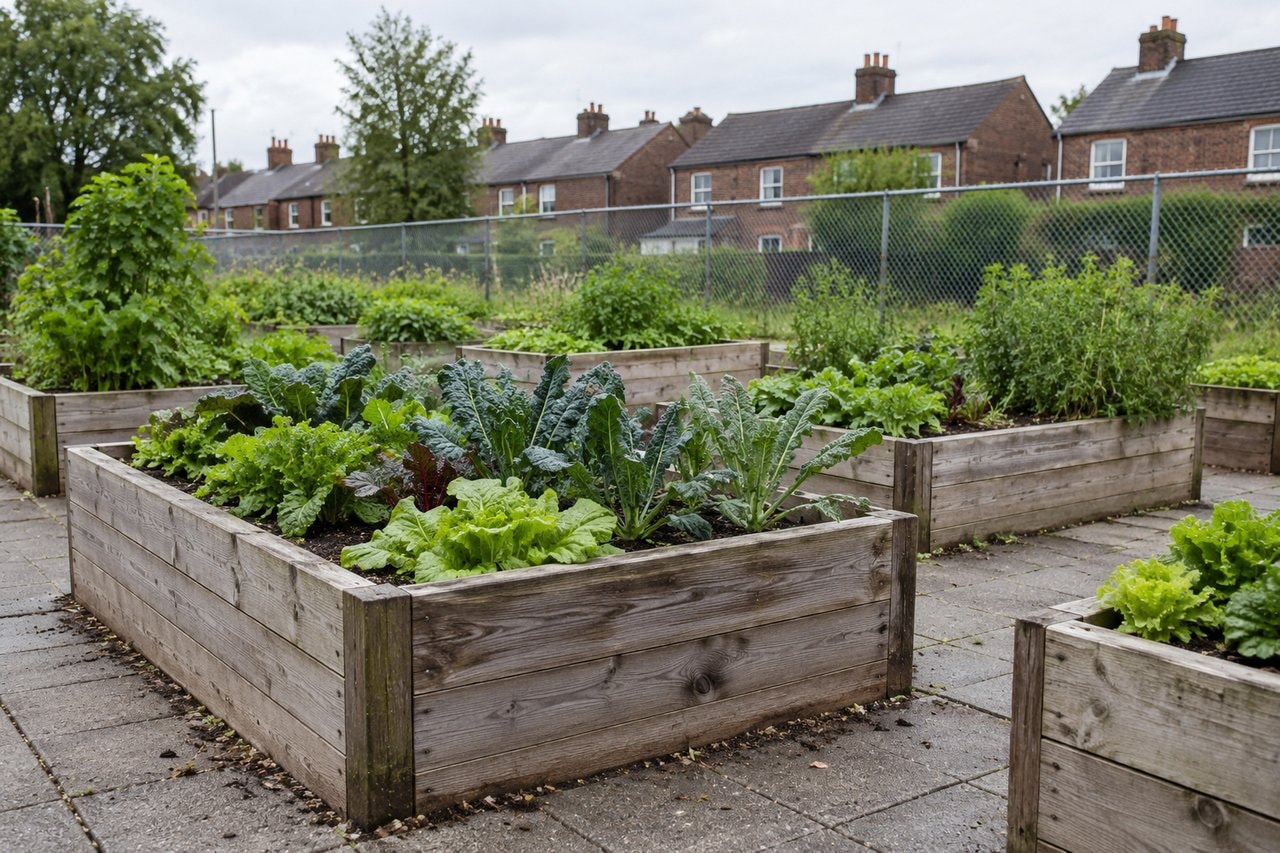
The term food program covers activities with different structures. Some concern lessons, some concern a food supply, and others concern the relationship between a school and its neighborhood. The sections below identify the question at the center of each model and connect it to a fuller page. A model describes an arrangement, not a service available from this reference. Program descriptions explain purpose and structure; research about results is a separate subject.
School gardens
Wikipedia defines garden-based learning as using a garden as a teaching tool across activities and subjects. The school-gardens page connects that educational setting to growing spaces, compost and soil safety. A garden's physical layout and its use in teaching are related questions. The page also explains what reviews of gardening programs examined, keeping their findings distinct from the definition of the model.
Student-run produce stands
A school produce stand raises questions about food sales, learning and supervision. The produce-stands page follows those questions through standards for food sold during the school day, the different model of free produce snacks, and agency material on produce handling and young workers. Describing a venture's educational purpose does not settle the rules for its sales or the responsibilities around its operation.
Farmers' markets and youth markets
Wikipedia's account of farmers' markets describes a retail setting where farmers sell directly to consumers. The markets page explains that relationship alongside food benefits and incentives at markets. Youth market stands are discussed as a connected subject, with attention to the young people's roles. The market arrangement and the benefit program remain distinct parts of the food-access picture.
Community supported agriculture and produce bags
Wikipedia describes community supported agriculture as connecting producers and consumers through a share in a harvest and shared farming risk. The page on produce shares and bags explains the arrangement and its variations. A bag is the container in which food travels; the agreement behind that food supply is the important distinction. The page concerns the model rather than a subscription available here.
Cooking classes
The cooking-classes page considers hands-on learning, food literacy and the organization of a shared kitchen. It reports what cooking-class reviews studied and states their limits. Kitchen and produce safety appear as attributed agency guidance. The subject is how a class is understood and kept safe, rather than a collection of recipes, menus or instructions for a reader's food intake.
Family fitness nights
The community-fitness page supplies the activity side of the reference for adult organizers and participants. It describes national guidance as guidance from its sources, then explains muscle, tendons, cartilage and joints. Research is reported with its stated certainty. A family activity setting is a subject for organization; it is not a reason to offer an individual exercise prescription.
Youth jobs and internships
Youth.gov describes positive youth development through opportunities, relationships and support that build on young people's strengths. The youth-jobs and leadership page relates that approach to employment, peer education and food enterprises. It is written for the adults around those roles. It also distinguishes the educational purpose of a role from young workers' rights and safety.
SNAP-Ed classes
The SNAP-Ed page explains the nutrition-education component of SNAP and the settings in which it is described. USDA's SNAP Nutrition page identifies education classes, social marketing and work on community policies, systems and environments. A class is therefore part of a wider program description. That description does not establish that any particular class is available to a reader.
Programs for adults and older adults
The adult and older-adult programs page distinguishes meals, food packages, market benefits and education. The Administration for Community Living's nutrition-services description includes group meals, home-delivered meals and nutrition education under the Older Americans Act. These arrangements concern different ways food and related services reach people. Their separate agency descriptions matter more than an umbrella label.
Service-learning partnerships
Wikipedia defines service-learning as connecting community service with classroom learning objectives and societal needs. The service-learning page explains the course relationship, while the volunteer handbook considers the volunteer role. Work in the same setting can involve different obligations and learning purposes. The presence of university students alone does not explain which arrangement is involved.
School meals and fresh-produce snacks
The school-meals page separates lunch and breakfast programs from snacks, food sales and wellness policies. USDA's Fresh Fruit and Vegetable Program supplies free fresh-produce snacks in eligible elementary schools, with short nutrition lessons. That is a different model from selling produce at a stand. The distinction concerns the source and conditions of the food supply.
How funding and supply fit the models
USDA's Farm to School Program uses grants, research, technical assistance and training to connect local food and agricultural education with child nutrition programs. NIFA's description of the Gus Schumacher Nutrition Incentive Program includes funding and evaluation of incentives for fruit and vegetable purchases by SNAP participants. These descriptions identify particular purposes for federal support; they do not say every garden, stand or market receives it.
Food supply and operating funds are also different forms of support. The Administration for Community Living describes its nutrition-services incentive support as cash grants, USDA food commodities or a combination, and describes local support from sources beyond federal funding. Those distinctions help an adult reader understand a program's structure. They do not establish a local award, an available benefit or eligibility for any individual or organization.