In schools
School gardens: how they work and what research has looked at
At a glance
- Gardens can be teaching settings
- Raised beds contain growing soil
- Soil testing informs safety
- Research findings depend on context
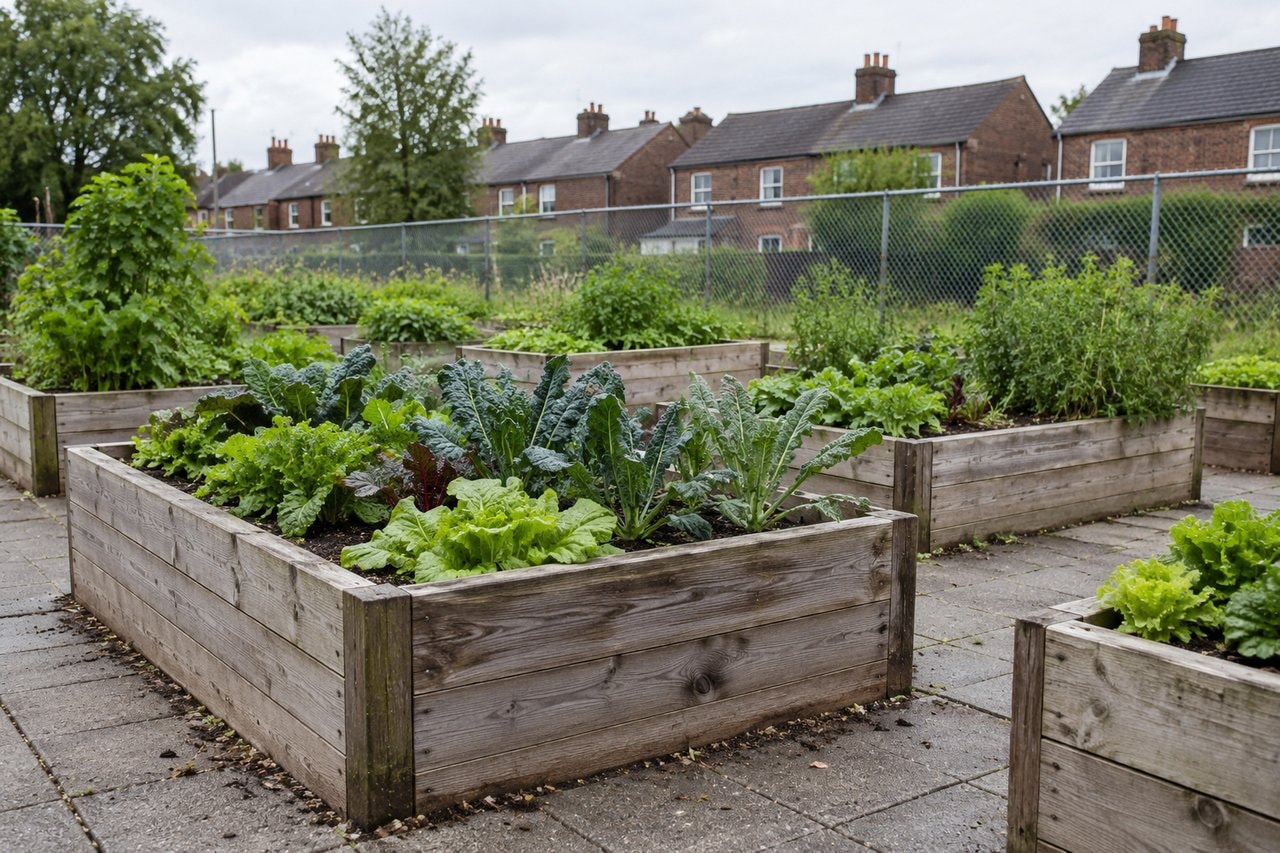
A school garden places growing plants within a school's learning environment. Wikipedia's school garden article describes a designated area where students learn to grow plants and produce, with classroom connections ranging from plant study to geography and design. The garden is therefore a teaching setting as well as a cultivated space. Understanding those separate purposes matters: a description of lessons explains what participants do, while research asks what changes, under which conditions, and how confidently those changes can be attributed to the program.
The garden as a classroom
Wikipedia's garden-based learning article describes activities and projects that use a garden for learning across subjects through direct experience. It distinguishes gardens that form the basis of a curriculum from gardens that complement classroom work. This distinction gives an adult reader a useful way to read a program description. A garden's presence, its use in lessons, and the depth of its connection to classroom teaching are different parts of the arrangement. Nutrition education in schools places those lessons alongside other teaching approaches.
USDA's Food and Nutrition Administration describes school gardens as educational tools and settings for community inclusion on its school gardens page. Its Patrick Leahy Farm to School Program page describes agricultural education and access to local food through grants, research, training and technical assistance. These are descriptions of federal aims and activities. They do not establish that any particular garden receives funding, supplies a cafeteria or produces a measured learning result.
Growing spaces and organic material
Wikipedia's raised-bed gardening article describes soil elevated above the surrounding ground, generally held within an enclosure, and commonly enriched with compost. Beds can be made from different materials and take different shapes. The physical structure and the soil inside it are separate features; an enclosure alone does not describe the soil's condition. The same article discusses liners in a particular construction context. A cross-section can show the bed, soil, compost layer and liner without being a construction specification or declaring a material suitable for every site.
The U.S. Environmental Protection Agency's home-composting guidance describes composting as managed biological decomposition that requires oxygen. It identifies carbon-rich materials, nitrogen-rich materials, moisture and air as the inputs, and distinguishes an active pile from finished compost. The agency includes leaves and fruit or vegetable scraps among suitable materials for a backyard pile. It excludes pet waste, treated wood and diseased plants, among other materials. Those distinctions explain why a compost area involves material handling and ongoing care, rather than serving as an unrestricted place for discarded material.
Soil safety begins with testing
Penn State Extension's discussion of residential soil lead identifies older lead-based paint, past vehicle emissions and industrial activity as sources of contamination. It explains that soil and dust can adhere to clothing and skin. Its testing guidance calls for following a laboratory's collection instructions, sampling areas separately and retaining a map of the sampling locations. These are soil-safety measures attributed to the extension source, rather than an assumption that city soil is uniformly contaminated or uniformly suitable for growing.
The EPA's lead-exposure guidance describes laboratory analysis as the best way to test soil for lead. For soil with higher lead levels, the agency describes growing food in containers or raised beds with clean soil, covering contaminated bare ground, washing after soil contact and limiting the movement of dirt indoors. Penn State Extension likewise discusses clean soil in raised beds. Testing and reducing contact address different questions: testing identifies the condition, while the agency's handling measures address pathways of exposure. Urban farms face related soil questions.
What the reviews examined
A 2009 review in the Journal of the American Dietetic Association examined garden-based youth nutrition interventions in school, after-school and community settings. It considered produce intake, willingness to taste and related outcomes. The authors found signs of potential for increased intake and willingness to taste, while describing the empirical evidence as scant and calling for better-designed studies. Potential in a review is a reason for further investigation, rather than a guaranteed result from opening a garden.
A 2022 systematic review in BMC Public Health included randomized, nonrandomized controlled and pre-post studies of gardening programs. It reported favorable findings for knowledge, attitudes and acceptance of vegetables, but said findings varied with the components, extent and length of programs, parental involvement and other social or environmental factors. The reviewed programs often combined gardening, cooking and nutrition education, so the result cannot simply be treated as an isolated effect of garden beds.
A 2023 realist synthesis in Nutrients examined how gardening interventions produced reported outcomes, why and in what circumstances. It identified combinations of curriculum integration, direct experience, family engagement, cultural context and reinforcement as mechanisms. Its scope concerned interventions with positive reported outcomes; it describes mechanisms and circumstances rather than a universal result for school gardening. Planting, observing growth and harvesting across a season remain learning activities described by the school garden reference. The route from harvest to a household is considered separately on the CSA and produce-bag page.